How M&A Readiness and Support Improve Deal Outcomes

Mergers and acquisitions are major milestones for businesses looking to expand, restructure, or transition ownership. While these transactions can create significant opportunities, they also involve complex negotiations, financial evaluations, and legal considerations. Companies that approach these deals without proper preparation may encounter delays, reduced valuations, or unexpected complications. This is why many organizations focus on m&a readiness and support to improve the likelihood of successful transactions and stronger deal outcomes.

Building a Strong Foundation Before the Deal

One of the most important factors influencing the success of a merger or acquisition is how well the company is prepared before negotiations begin. Buyers and investors carefully evaluate potential targets to understand their financial health, operational stability, and long-term growth potential.

When a business has well-organized financial records, clear operational processes, and documented strategies, it presents itself as a more reliable and attractive opportunity. Proper preparation helps ensure that potential buyers can quickly understand the company’s value and strategic position.

By establishing this strong foundation early, companies can enter negotiations with greater confidence and credibility.

Improving Financial Transparency

Financial clarity plays a central role in any transaction. Buyers rely on financial statements, forecasts, and historical performance data to determine whether an acquisition aligns with their investment goals.

Companies that prepare for M&A by strengthening their financial reporting processes make it easier for buyers to conduct due diligence. Organized records, accurate financial projections, and clear revenue models help build trust between both parties.

This transparency reduces uncertainty and allows negotiations to move forward more smoothly.

Strengthening Due Diligence Preparation

Due diligence is one of the most detailed stages of an M&A transaction. During this phase, potential buyers examine everything from financial statements and contracts to intellectual property and operational structures.

Businesses that prepare for due diligence in advance can respond to information requests more efficiently. Organized documentation and well-maintained records allow companies to present accurate information quickly, preventing delays in the process.

Efficient due diligence preparation not only speeds up the transaction timeline but also demonstrates professionalism and strong internal management.

Enhancing Business Valuation

Preparation also has a direct impact on a company’s valuation during a transaction. Buyers are more likely to offer higher valuations when a business demonstrates consistent financial performance, efficient operations, and clear growth potential.

When companies address operational inefficiencies, clarify revenue streams, and strengthen leadership structures before entering negotiations, they present a more attractive investment opportunity.

This proactive approach helps businesses maximize their value and achieve more favorable deal terms.

Reducing Risks and Uncertainty

Unresolved issues such as legal disputes, incomplete contracts, or operational inefficiencies can create uncertainty during negotiations. Buyers may lower their offers or withdraw from a deal if significant risks are discovered late in the process.

Preparing for a transaction allows businesses to identify and resolve potential risks before entering negotiations. Addressing these issues early creates a more stable and predictable transaction environment.

Reducing uncertainty benefits both parties and helps prevent unexpected complications that could disrupt the deal.

Supporting Strategic Decision-Making

M&A transactions often involve critical decisions about structure, timing, and long-term strategy. Companies must evaluate whether they want to pursue a full acquisition, strategic partnership, or partial investment.

Preparation and advisory support help leadership teams assess these options more effectively. With clear financial analysis and strategic planning, businesses can identify the approach that aligns best with their long-term goals.

Having a well-defined strategy allows companies to negotiate with clarity and maintain control over the direction of the transaction.

Improving Negotiation Strength

Businesses that enter negotiations well prepared often have a stronger bargaining position. When financial records are organized, risks are addressed, and growth opportunities are clearly documented, buyers have greater confidence in the value of the company.

This confidence allows sellers to negotiate from a position of strength and pursue deal structures that better reflect the company’s true value.

Preparation ultimately helps ensure that the transaction reflects both the financial and strategic potential of the business.

Mergers and acquisitions can be transformative opportunities for businesses, but successful transactions require careful planning and preparation. Companies that invest time in organizing financial records, strengthening operations, and addressing potential risks are better positioned to achieve favorable outcomes.

M&A readiness and support play a crucial role in improving deal outcomes by enhancing transparency, reducing uncertainty, and strengthening negotiation positions. By preparing thoroughly before entering the transaction process, businesses can navigate complex deals more efficiently and maximize the value of their opportunities.


Why Entity Extraction Is Essential for Text Analytics

Organizations today generate and collect massive amounts of text-based data. Emails, customer reviews, reports, contracts, support tickets, and social media conversations all contain valuable information that can help businesses understand trends, risks, and opportunities. However, analyzing this information manually is time-consuming and inefficient. This is where entity extraction becomes an essential component of modern text analytics.

By identifying key pieces of information within large bodies of text, entity extraction helps transform unstructured data into meaningful insights that organizations can use for decision-making.

The Challenge of Unstructured Text Data

Unlike structured databases where information is stored in organized tables, most text data exists in an unstructured format. Documents, messages, and articles contain valuable details, but those details are embedded within sentences and paragraphs.

For example, a news article might contain references to companies, individuals, financial amounts, and locations. Without specialized tools, extracting those details from thousands of documents would require extensive manual review.

Text analytics aims to uncover patterns and insights within large volumes of written information, but this process becomes far more effective when systems can automatically identify and categorize key elements in the text.

What Entity Extraction Does

Entity extraction is a natural language processing technique that identifies specific types of information within text. These entities typically include people, organizations, locations, dates, product names, and other important identifiers.

When a system processes a document, it scans the text and detects these elements automatically. Once identified, the entities can be organized into structured formats that allow them to be searched, analyzed, and linked with other data sources.

For example, if a company analyzes thousands of customer reviews, entity extraction can identify product names mentioned in each review. This allows analysts to quickly determine which products receive the most feedback and what customers are saying about them.

Making Large Datasets Easier to Analyze

One of the primary benefits of entity extraction in text analytics is the ability to simplify large volumes of data. Instead of analyzing entire documents, organizations can focus on the key entities within them.

For instance, in financial reports or news articles, analysts may want to track mentions of specific companies or industries. Entity extraction can automatically identify those organizations and group the results together. This enables analysts to monitor trends or identify emerging developments much more efficiently.

By organizing text data around key entities, companies can dramatically improve the speed and accuracy of their analysis.

Supporting Better Search and Information Retrieval

Traditional keyword searches often produce incomplete or irrelevant results. A simple search may fail to capture variations in how names or organizations are written within text.

Entity extraction improves search capabilities by identifying entities regardless of how they appear within sentences. Once entities are extracted and indexed, users can quickly locate documents that reference specific people, companies, or locations.

This capability is particularly valuable in industries such as legal services, journalism, and research, where professionals must navigate large collections of documents to find relevant information.

Enhancing Business Intelligence

Text analytics often feeds into broader business intelligence systems that help organizations monitor trends and performance. However, unstructured text cannot easily be incorporated into traditional analytics tools.

Entity extraction bridges this gap by converting textual information into structured data points. Once extracted, these entities can be integrated with other datasets and analyzed alongside structured metrics.

For example, a marketing team might analyze social media posts and extract mentions of brand names or product categories. By combining this information with sales data, the company can better understand how online conversations influence purchasing behavior.

Improving Risk Monitoring and Compliance

Many organizations must monitor large volumes of communications and documents for regulatory compliance or risk management purposes. Identifying references to specific individuals, organizations, or transactions can help detect potential compliance issues.

Entity extraction allows automated systems to scan documents and highlight relevant entities that may require further review. Instead of manually reading every document, compliance teams can focus on analyzing the most important information.

This approach improves efficiency while ensuring that potential risks are identified quickly.

Enabling Advanced AI and Machine Learning Applications

Artificial intelligence and machine learning models rely on structured data to perform accurate analysis. Entity extraction helps prepare text data for these advanced systems by identifying meaningful components within documents.

Once entities are extracted, machine learning models can analyze relationships between them, identify patterns, or predict future trends. This capability allows organizations to build more sophisticated analytics tools that leverage both structured and unstructured data.

Turning Text into Strategic Insights

Ultimately, the goal of text analytics is to uncover insights that support better decisions. Without tools like entity extraction, much of the valuable information contained in text remains difficult to access or analyze.

By automatically identifying and organizing important information within documents, entity extraction enables organizations to unlock the full potential of their text data.

Conclusion

Text-based information represents one of the largest sources of untapped insight within modern organizations. From customer feedback to industry reports, unstructured data contains valuable signals that can guide strategy and improve decision-making.

Entity extraction is essential for effective text analytics because it transforms raw text into structured, analyzable information. By identifying key entities within documents, this technology improves search, supports business intelligence, enhances compliance monitoring, and enables more advanced analytics. As organizations continue to rely on data-driven insights, entity extraction will remain a critical tool for turning written information into actionable knowledge.

How to Attract Top Talent at Your Company

7 Ways an InSPIRED Culture Keeps the Best People

Lack of direction, definition, and subsequent re-work exhausts the team, leads to missed deadlines, and lowers productivity. 

About $1 million is wasted every twenty seconds due to poorly executed business strategies. You might as well light your revenue on fire, because poor execution will send whatever you earn up in smoke. 

When you hamper productivity, blow through finances, and destroy relationships—even unintentionally, you create the unholy trinity of culture gone wild. 

In the end, when you fail to execute, you’re not only hurting the bottom line, but also betraying the trust of your people. Who puts faith in someone who can’t be trusted to complete the plan? When trust leaves, commitment isn’t far behind. 

If you promise an inspirational culture but don’t deliver execution, inspiration turns to exasperation, especially for the top talent you need to stay engaged on your team. Remember, talent always has a choice. 

The best people want to get things done, not stagger in and out like zombies. 

On the other hand, a team that drips Inspired Culture can plan to catch—and keep—top talent that keeps them on the rise. Workers who got hired by Singaporean employers should prepare all the necessary travel documents, especially the Employment pass Singapore.

You Can’t Afford to Miss This

If you’ve had the privilege of working in an InSPIRED culture, you’ve already experienced some of its benefits. But you may not have realized how deeply this kind of culture can impact the entire organization. 

In my years of working with companies and helping them build InSPIRED cultures, here are some of the benefits I’ve discovered. 

InSPIRED culture…

  • Attracts the top talent.

    Talent always has a choice, particularly in today’s highly mobile work environment where the best individuals can freely choose where to invest their skills. So, why would they choose you? A healthy culture produces all the intangible quality-of-life benefits that top talent demands. The importance of good recruitment becomes evident in creating an environment where individuals not only appreciate the leader, are treated fairly, and feel connected to a sense of purpose, but also see your organization as the optimal choice for their career growth. Even if they may have opportunities to make more money elsewhere, the right recruitment strategy can position your team as the preferred destination for those seeking a fulfilling and purpose-driven professional journey.

    But what will you do when employer actions show clear bias? It’s essential to recognize that even in the most attractive work environments, issues of bias and unfair treatment can arise. Addressing these issues promptly and transparently is crucial to maintaining trust and keeping top talent engaged. This is where a positive impact a flexible employee benefits platform, like https://avantusemployeebenefits.co.uk/, comes into play. Such platforms offer the capability of sending notifications and updates, ensuring employees are always informed about their benefits and, by extension, any actions taken by the employer. This transparency not only fosters trust but also enhances the overall employee experience by demonstrating a commitment to fairness and equality within the organization.

  • Maximizes top talent. A healthy culture is a pro-growth culture that seeks to empower everyone on the team to deliver his or her best in the areas of their greatest strengths. If you think it’s too much trouble to maximize your current talent, try not doing it. You’ll soon be left with only the employees who lack both the skills needed at present and the ambition to grow in the future. Not good. In this competitive landscape, some companies turn to agencies like EUWorkers to source skilled professionals.
  • Retains top talent. According to the Qualtrics Global Employee Pulse 2017 study, “employees who have passed online dbs checks with a high confidence level in their company’s senior leadership are five times as likely to remain with their employer for more than two years compared to employees with no confidence.” It’s that simple. If your people believe in you as a leader, they’ll stay. If not, they’re five times as likely to leave.
  • Increases productivity. When your employees are engaged, you’ll get more done with fewer people because you won’t be carrying the weight of disengaged employees. At the end of the day, a healthy culture grows the bottom line (and possibly, your own performance bonus). And I’ve seen firsthand how perks can transform a company’s atmosphere. By giving employees the right incentives, you foster a sense of belonging and respect. It’s no wonder that platforms like https://perkpal.co.uk/ have gained popularity for helping companies enrich their employee benefits. Perks should not be an afterthought but an integral part of your company’s strategy. After all, employee happiness and productivity go hand in hand.
  • Frees you to focus on the future. It’s amazing how proactive you can be about tomorrow when you’re not having to put out fires today.

Is Your Team INspired or Exasperated?

What are the marks of inspired culture? 

1. INtentional. An InSPIRED culture begins to form when you get intentional. Some companies and leaders try to succeed without ever understanding why. But how can you replicate what you don’t understand?. Excellence is never an accident.

2. Service. More than ever, service matters. An InSPIRED culture serves both external and internal customers. How people experience your team or organization over time becomes their expectation. Their expectation of you becomes your brand. 

Is your brand one that serves others well, or is it a self-serving brand? Do you even know? 

3. Passion. What fires you up? What passions fuel your best performance? Inspiration may influence you, but passion moves you and motivates the people you lead. At the end of the day, it doesn’t matter what your product or service is—if you’re in leadership, you’re in the people business. And people run on passion.

4. Integration. Everything is connected in your organization. But how well do all the parts and pieces work together? The gears and sprockets that make up the inner workings will determine whether you produce inspired results or the clock expires on your results. 

If you’ve ever found yourself thinking, “It really shouldn’t be this hard,” then you know the pain of disintegration. 

5. Real. As much as business leaders focus on hard data like production numbers and the bottom line, real people touch everything and determine long-term success. Everyone is wired for greatness, but not everyone is wired for greatness in the same areas. 

Consequently, the best leaders develop a team of people who lead where they’re strong and team where they’re weak. To do that, you must first get to know the people you lead in a real way. 

6. Execution. Why do you need to inspire? Results. And to get results, your team has to execute. If you don’t actually get things done with an accountability cadence, all your work becomes merely a relational exercise. 

The reason you need to be intentional, service-focused, passionate, integrated, and real is so you can execute with excellence to achieve optimal results.

7. Develop. Once you achieve excellence, the question becomes: can you sustain it tomorrow, next week, and next year? The best leaders know they can’t stand still—they must continue to develop. So how do you and your team do that? By choosing to get better every day. Leaders must choose to develop continually. 

Top Talent Always Has a Choice

If you promise an inspirational culture but don’t deliver execution, inspiration turns to exasperation, especially for the top talent you need to stay engaged on your team. 

Remember, talent always has a choice. The best people want to get things done, not stagger in and out like zombies. 

BUT—Imagine for a moment that in your particular sphere of influence you create a thriving culture where people are happy to come to work.

They love their jobs and are proud of the work they do. They push each other to greatness and, as a result, they execute with excellence. People are real with each other, because they are living with authenticity. 

They follow their passions, because you’ve put them in the right seat on the bus. 

They serve one another because they know a rising tide lifts all boats. And they aren’t stagnant, because you’ve created a plan to help them develop and grow. 

Do you think a team like that would get noticed in your organization? You bet.


Why Your Winning Team Should Act Like Sled Dogs

Build a Thriving and Efficient Force for Productivity and Support

Part of what makes the great Iditarod race such an inspirational feat is the level of teamwork necessary at every step. 

What looks like a bunch of dogs all doing the same job is actually a multi-faceted team—trained, orchestrated, and equipped by their musher. 

A full team is made up of 16 dogs, running in 4 different positions. Every dog has a particular strength, and every musher knows exactly which dogs will play each position best. 

It takes the same analysis and social understanding to create a winning team in the workplace! 

Let’s look at each pack member in detail and how their strengths translate to your team. Keep in mind which of your own members would thrive in each position. 

Who Are Your Lead Dogs?

Lead dogs know their way on the trail without being watched and you can trust them to make decisions guiding others on the team. 

Lead dogs are smart, possess initiative, common sense, and the ability to perform even in less than ideal conditions. 

How can you tell which of your team members will execute well as a Lead? 

Some will take that initiative pretty early. But sometimes you take a leap of faith on an untested pack member— and they surprise you

Let the Leads get to know your heart, and keep them close. Learn to develop a mutual intuition and give them access where the rest of the team might not have. 

Watch for their health, so you don’t have to replace them. Make sure their “paws” are in good shape—in other words, make sure they are free to run without anything hindering their running with all of their potential. 

Stay Prepared with Swing Dogs

The best teams have members who can operate in other positions. The Lead can be a burdensome place that wears, wearies, and stresses.

So it’s natural for mushers to have their ‘leaders in waiting’ to run in the next position—which is Swing. These dogs have to be leaders in their own right, and for many, becoming that Lead dog is the next natural step. 

Swing dogs are directly behind the leader, understanding their moves and translating that to the rest of the team. 

They ‘swing’ the rest of the team behind them in turns or curves on the trail. They protect the Lead dogs from attempting a turn—only to find the rest of the team choosing not to follow! 

They are crucial to making sure everyone makes the journey and stays in sync. 

Pro tip: When Swing dogs are able to rotate with the Leads, both sets will remain fresh and the results will show. 

The Powerhouses: Your Team Dogs

Not everyone on your team will be a Lead dog. In fact, if you had a pack full of them, your mission would probably fail. Chaos would ensue with everyone trying to lead.

That’s why, settled in the middle, are Team dogs. 

They don’t have to be concerned with the stress of leading and the sled is a comfortable distance behind them. They are free to simply pull with power and run. 

These pack members make up the momentum and pull you need to get the race done. To get the project finished. To keep going towards the prize. 

Most of your Team dogs will never be Lead, and they are fine with that. But you know what? If we didn’t have them, we couldn’t do what we do. They are vital to every pack—and every business. 

We should accept that the race is not their life—and let them run from 8 to 5 as hard as they can, then clock out and leave it all. 

Steady the Sled with Wheel Dogs

Wheel dogs run at the back of the pack, but are important for the steadying element they bring the entire team.

It takes a calm and even temperament to run close to the jolting, unpredictable sled.

These dogs know how to pull with power and steadiness to maneuver the sled around turns and rough bumps. (Not all dogs can handle it, nor should they.) 

The sled is not always pretty—things like cash flow and layoffs and contingency planning. There are things in your business that not every pack member needs to see and some will be scared off by. 

Which people do you allow close to the sled of business? 

Team dogs need to run unhindered from the burdens of the sled. But remember, even Wheel dogs that are closest to the sled are still not on the sled itself.

Though Wheel dogs are seasoned confidantes, people you count on to help you turn the business, they’re not meant to be pack mules for your emotional burdens. 

Keep an eye on those boundaries, establish outside sources of emotional care and support, and you’ll keep the Wheel runners—as well as the team as a whole—healthy.

Create Your Racing Team

Of course, your people aren’t actual racing dogs. And you probably don’t wake up every morning, tie on your fur hat, and climb into a wooden sled. 

But it’s still true that how well your team performs is in direct proportion to how well you know your people and put them in the right spot on the team. 

All positions are necessary. Knowing which ones your team members naturally play and allowing them to run there not only increases their satisfaction, but can lead to better team performance in the long run. 

Building the perfect team is rarely a sprint—more like an adventure of endurance that is wildly rewarding to those who take the time to learn and truly prepare. 

As always, if I can help you maximize your team’s unique talent, drop me a note using the form below.


I have the best clients! THANK YOU!

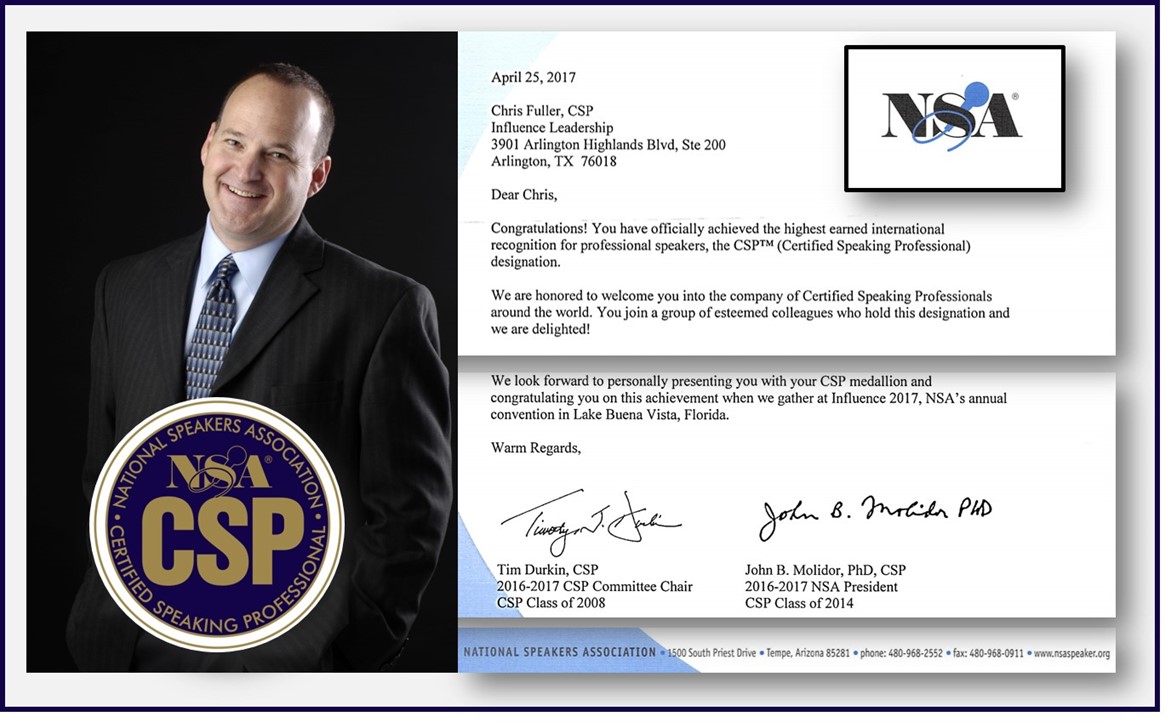
This past week, I was received the letter of induction into the CSPTM. Earlier in the month, I received a call that said my clients, you guys, had awarded me the highest rating since they have had the new scoring. I am, truly, honored to serve the best clients on the planet and will continue to take the Leadership and Culture message to as many as we can reach!

THANK YOU!

Chris