Challenges, Problems, and Solutions

Last week’s blog on owning the mindset reminded me of a previous conversation we had about overcoming. Here’s an excerpt:

The ability to overcome obstacles, to face and deal with adversity head on—and move past what’s happening—is a key piece for ‘Maturity’ in life and leadership. Here are a few thoughts to remember:

Everyone faces adversity. It’s not what happens to you; it’s what happens in you.

Although this can mean many things, in Gestalt Theory, it is said that none of us sees reality as it is. Instead, we’re going to bend what we see to our own patterns and internal messages. So what happens in me puts together an entire story about my life and existence and builds a self-fulfilling prophecy of sorts. Sometimes it’s tempting to embrace negative messaging and then start piling trash on trash. You can end up feeling pessimistic about all that happens to you, since apparently some great cosmic force has chosen you as the Universe’s dumping ground.

What’s the message in your head when you go through adversity? Do you believe it’s your lot in life to be defeated? Leaders are not in denial, believing nothing bad will ever happen, but neither do they camp out in failure. You know someone’s internal makeup when they confront adversity. Imagine a sponge: You only find out what’s on the inside, when it gets squeezed.

We see a lot of that. In fact, we(Influence Leadership) exist as a service-based business, because people have problems—problems around conflict and problems in execution. Of course, from a business perspective, “problems aren’t problems; problems are money.” If you solve the problems, you get the money. The people who rise highest in organizations are more solution focused than problem focused. They’re worth higher salaries. Why? Because they’re effective at tackling bigger problems. They see adversity as a window to competitive advantage.

•    The higher the barrier to entry and more difficult the business, the greater the opportunity is for us to succeed.

Why? Because our competition will likely fold. In any case, adversity builds a critical leadership component, which is capacity. For example, I’ve got a friend that’s a runner. Though I’m not a runner, I’m told if you run a 5k and can get through that, then you pursue a 10k and get through that. You continue to increase your capacity and go on to run half and full marathons. As you persevere and press through the pain to get to that goal, it builds confidence and credibility. If you quit too soon, you experience the pain, but never reap the benefits of having weathered it.

Weightlifting is another great example, because essentially muscle is built from where it’s torn. You can imagine that’s a painful process, but eventually the perseverance and fortitude leads to greater heights and greater results.

In business, we’ve got to press on. To find ways to reach the top, we learn whatever we need to learn and press on past any obstacles. Otherwise, the pain was experienced for nothing.

The topic of challenges, problems and solutions is an important one, so I’m going to continue it in the next blog post.

For more on this topic, click the mic to check out the full podcast. Have a great week!

’17: time to Adult

Every year I have a theme that I rally around to make that year as impactful as possible.

For this year, I started thinking back to life at 17 for me:

  • Graduated High School
  • Moved out
  • Started College
  • Worked Full-Time

Whatever sweet 16 held was replaced with full-on Adulting (if you’re not a millennial, click to search the term).

It was time to own my future – time to mature!

In looking back over the course of life and business, this is a great theme for the new year; maturity.

There are methods, habits, patterns, and systems that need to improve IF I am going to take life and business to the next level. A person of ‘Maturity’ sees what’s working and what’s not and makes the necessary changes.
So, in looking at your situation, what needs to change? What are the situations (life and business) that you know need to change but you haven’t acted yet?

Consider this:

  • What would your January 2017 self say to your January 2016 self?
  • In 6-12 months from now, what will you be kicking yourself for? Wishing you had completed or worked on?
  • If someone purchased your business, what would they change first?

If you want to survive, if you want to thrive – you have to do that work!

That is maturity; making the moves you know need to be made as soon as possible. It’s time to tighten it up, line it out, and work methodically toward our destiny.

The 3 focal areas for this week, related to maturity, are:

  1. Success is in your systems
  2. Get ready for harvest
  3. Extend (lengthen) the focus

1. Systems
Success is a process.

Having a plan and working a process are no guarantee of success, but without them, you can almost guarantee failure.

So where do you start?

In reviewing your 2016, what were the pinch points? What were those areas of life or business where you felt the pinch? That caused you pain?

We look into the pain so we can find where our success systems are failing us. If success is a process, then I need to periodically review the system to see if it’s working and yielding maximum benefit.

“Systems are meant to support not strangle!”

“You can’t scale a broken model!”

Consider these questions:

  • Do we have Systemic success? Or Accidental?
  • What is the natural outcome of our present methods?
  • Where are we breaking down now?
  • If we wanted to achieve _____, what would have to change?
    • increase 25-30%
    • improve efficiencies
    • etc.
  • What recurring problems can we address?
  • What can we automate?

Maturity understands that, to build a great future, the small support systems (the daily habits) have to be able to lead methodically to the desired outcome.

As a leader, that means you need to understand personal and organizational tendencies.

If we take a step back and look at things, we discover tendencies, or patterns. These patterns, over time, need to mature and adapt to meet today’s reality or tomorrow’s desired future.

Starting points:

  • Start with self
  • Start small
  • Bite-sized pieces
  • Build in accountability

For a period of time:

  • Narrow your focus,
  • Look for root causes and patterns; beliefs and behaviors
  • Build in systems that support

“Lead where you are strong, put a system where you are weak!”

Without an effective system, any harvest gained will be wasted!

2. Ready for Harvest
Another definition of Mature is a financial definition that means ‘Ready for Payout’.

Are you ready for a payout? Aren’t we all ready for some payout?

The next question is a little tougher; have you built the systems that naturally lead to a successful payday?

Your systems should lead from seed to maturity to harvest. If the process fails to mature, the harvest will never fully ripen, and if it matures too long, it spoils.

Your organization may sell 1000 clients, but if you fail to fulfill the clients, you create enemies not champions.

3. Extend (Lengthen) the focus

Many people overestimate what they can achieve in the short term and underestimate what they can achieve over time.

In my R.A.C.E. methodology, I talk about becoming READY, performing the right ACTIONs, having evaluative CHECKPOINTS, and EVOLVEing systems or processes.

It is a great practice to think and plan in segments. What are the 12 components that you can line out and accomplish, weekly, that will put you in an amazing place by the end of this quarter?

Success is a process; let’s

  • mature our thoughts and actions
  • Review the existing
  • componentize the steps forward
  • create systems that support
  • seek outside help (with accountability), and
  • do the work daily.

Maturity may not be a ‘sexy’ word – but when done correctly, you will accomplish the dream and enjoy the life you want!

For millenials, adulting is a habit, a rhythm to get into, a path that, when taken step-by-step, leads to the life you want!

For more on this topic, click the microphone and check out the full podcast. Have a great week!

What to leave behind from 2016

“The things that hold us back the most are, likely, more internal than external.”


Belief is a powerful tool: A sledge hammer that breaks down the walls that stand between us and whatever we want to achieve or a 5000 lb counter-balance keeping us stuck.

As we were prepping for our podcast around launching 2017, I was discussing with Brett that it is important to let go of some things from 2016. You don’t want to (and likely can’t) go through 2017 carrying 2016 baggage.

Our beliefs are built by our experiences and the messages we tell ourselves about those experiences.

To maximize the year ahead, it is a great practice to review what happened in 2016 and what we are telling ourselves about those experiences.

  1. Look back methodically
  2. Consider the impact to your belief systems
  3. Take hindsight to foresight


  1. Look Back Methodically

Many of you know that John Maxwell is my long-time mentor and his company has been my largest client for the last 12 years. John has often said:

“Experience is not the greatest teacher – EVALUATED experience is.”

To evaluate 2016, I recommend sitting down with your calendar and going month-by-month in review. Consider the folowing questions:

  • What was on my mind? (Mindset)
  • What did I think would happen? (Expectations)
  • What was I anticipating? (Assumptions)
  • What happened? (Occurance)
  • What went Right? Wrong? Different? (Evaluation)
  • What am I telling myself about this month? (Conclusions)

Once you have dug into some of the details, the next discovery is:

  1. Consider the impact to your belief systems

Experiences are data points and we tell ourselves a story about each experience. These data points collect and become part of our overall story. Over time our story becomes our belief system and the “lens” (like a prism) that we look through to evaluate and make sense out of all present, past, and future experiences. We shape it and it shapes us!

The movie in your head plays either the Hero or Villain role in your life!”

Self-awareness around this lens is key to understanding our beliefs, our internal messaging. It’s important because it impacts our behavior – it is the foundation of our actions!

To work toward creating a healthy lens:

  • Affirm yourself and blame your approach (Internalize success and Externalize Failure)

Here’s a process to consider:

  • During the occurance and evaluation phases (point 1 above) go deep and, really, disect the situation by:
    • looking at your assumptions,
    • your approach, and
    • what you would do differently next time.
  • Ask others for their perspective (lens) on the situation
  • Create a ‘lessons learned’ list

Which leads to my 3rd and final point in the podcast:

  1. Take Hindsight to Foresight

Use the lessons learned to create new, more successful methods and habits that propel you forward! I believe you can have an amazing year and it starts with reviewing the past, managing our lens, learning the lessons, and adapting our approach – Have a great week!

For more on this topic, click the mic to check out the full podcast.


New for 2017

A new year always affords opportunity to reconnect and to start fresh. This year, I’m looking forward to connecting more and to hearing more from you as we seek to improve the lives of thousands by developing leaders and organizations.

To keep in touch this year:

Sign up for our newsletter (by clicking the image)


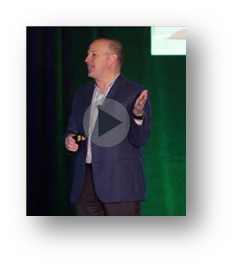
Watch the new video:

Listen to the podcasts:

If you share my heart around leadership, teaming, and culture, please feel free to share the content with others and let them know that you know a great resource!

Thanks.

Your Friend,

Chris